Dealer fees are the small cost tied to offering customer financing. When you first see that percentage, it’s easy to think it cuts straight into your margin. That reaction makes sense for any contractor who pays close attention to profitability.
What doesn’t stand out as quickly is how much financing influences the homeowner’s decision.
Without a comfortable payment option, they hesitate. They leave the appointment unsure, and many end up moving forward with a contractor who offers financing on the spot.

That's where the real cost shows up—not on a fee line, but in the jobs that never turn into revenue.
Let's clarify what dealer fees are, how successful contractors offset them, and why the return is usually much bigger than it first appears.
What Contractors Should Know About Dealer Fees
Dealer fees often cause confusion, so it helps to look at them in simple, practical terms.
What is a dealer fee in contractor financing?
Dealer fees are what the lender charges you — the contractor — for giving your customer access to financing.
Think of it as a transaction fee: when a homeowner finances a project, the lender funds the full amount to you, then collects payments from the customer over time. The dealer fee is the lender's cut for taking on that risk and managing the loan.
Are dealer fees the same for every lender or program?
Dealer fees are not fixed across the board. They change based on the lender, the program type, the term length, and the approval profile. Some contractors assume every program carries a high fee, so they stop the conversation early. However, the range is wider than most people expect.
What percentage are dealer fees usually?
Dealer fees vary depending on the type of financing program:
- Standard/reduced-rate installment loans (regular monthly payments with normal interest starting day one) → most contractors today achieve an effective 2–4%
- Promotional/deferred-interest plans ("0% for X months," "same-as-cash," or no payments for 12–24 months) → 8–25%+ because the lender subsidizes the customer's low or delayed interest, and you cover that cost upfront.
In practice, top contractors keep their blended fee in the 2–3% range by leading with standard programs and only pulling out promotional offers when the customer specifically asks for them.
Why do contractors think dealer fees hurt their margin?
Dealer fees are easy to see as money off the top, and that naturally feels like lost profit. But here's what that instinct misses: you only pay the fee when the job closes and funds. No sale, no fee. So it's not a cost you're absorbing on every lead — it's a cost tied directly to revenue you wouldn't have without it.
The ROI: A Small Fee vs. a Much Bigger Win
The real impact of dealer fees becomes clear when you look at what happens without financing. When a homeowner wants the project but can’t comfortably pay the full amount upfront, the sale slows down. They hold off, say they’ll think about it, or even shrink the scope to fit their budget. Some will push for discounts. And many end up choosing another contractor who offered a payment option on the spot.
First, your lead cost is already sunk
Before we even talk about dealer fees, think about what you’ve already invested to get in the home:
- $200–$300 in marketing to earn the lead
- sales time and effort to pursue it
- rep time prepping and running the appointment
None of that comes back if the job slips away. Not monetizing your leads costs more than dealer fees ever will.
The fee you see vs. the deal you lose
A 3% fee on a $35,000 job comes out to $1,050. Contractors often get stuck on that amount without considering the bigger picture. But when a homeowner walks away because financing wasn’t available, you don’t avoid a fee — you lose the entire $35,000 job.
Remember: you only pay the fee if the deal closes.The trade-off isn’t “fee or no fee” but a few thousand in fees versus tens of thousands in revenue.
The math on one lost deal
Think about one homeowner this month who wanted the project but said "let me think about it" and then went quiet or signed with someone else.
You already spent the money to get them in the door. That cost is the same whether you close or not.
Here’s what that difference looks like when you compare the two outcomes side by side:
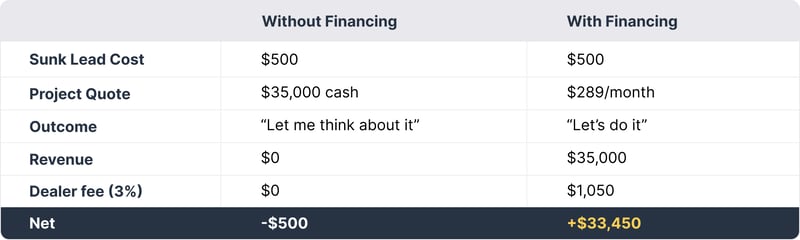
You spend ~$1,050 to make ~$35,000. That’s roughly a 30:1 return.
Now ask yourself: how many "let me think about it" conversations happened this year? If Financing could have helped close just five of them, that's $175,000 in revenue you already paid to generate.
Why discounting and scope cuts costs more than any dealer fee
Here's something most contractors don't think about: you're probably already giving away 5-10% in cash discounts just to close deals.
A rep quotes $35,000. The homeowner hesitates. The price drops to $33,000 to save the sale.
That’s $2,000 in margin gone — and the customer now wonders if the original price was ever real.
The same thing happens with scope. When the homeowner is focused on cash, they often cut parts of the project to fit what they have on hand. A $35,000 job becomes a $28,000 job because upgrades, add-ons, or needed work get trimmed down.
Financing changes the entire dynamic. When the customer can look at a monthly payment instead of the full price, they stop pushing for heavy discounts and stop shrinking the project to make the numbers work. Many feel comfortable choosing the full scope — and some even expand it — because the monthly payment fits their budget.
So the question isn't whether you can afford dealer fees. It’s whether you can afford losing margin, losing ticket size, and creating doubt about your pricing every time a homeowner hesitates.
How Top Contractors Structure Pricing to Offset Dealer Fees
Contractors who close consistently don’t treat dealer fees as an added expense. They build them into their pricing the same way they handle labor, materials, or overhead. With the right approach, the fee becomes part of a predictable structure that keeps margins steady and helps more customers move forward.
A simple adjustment covers the fee
Many contractors add a 2–3% adjustment to their base pricing. It takes care of the dealer fee, protects margin, and it’s subtle enough that most homeowners don’t feel the difference.
Lead with monthly payments
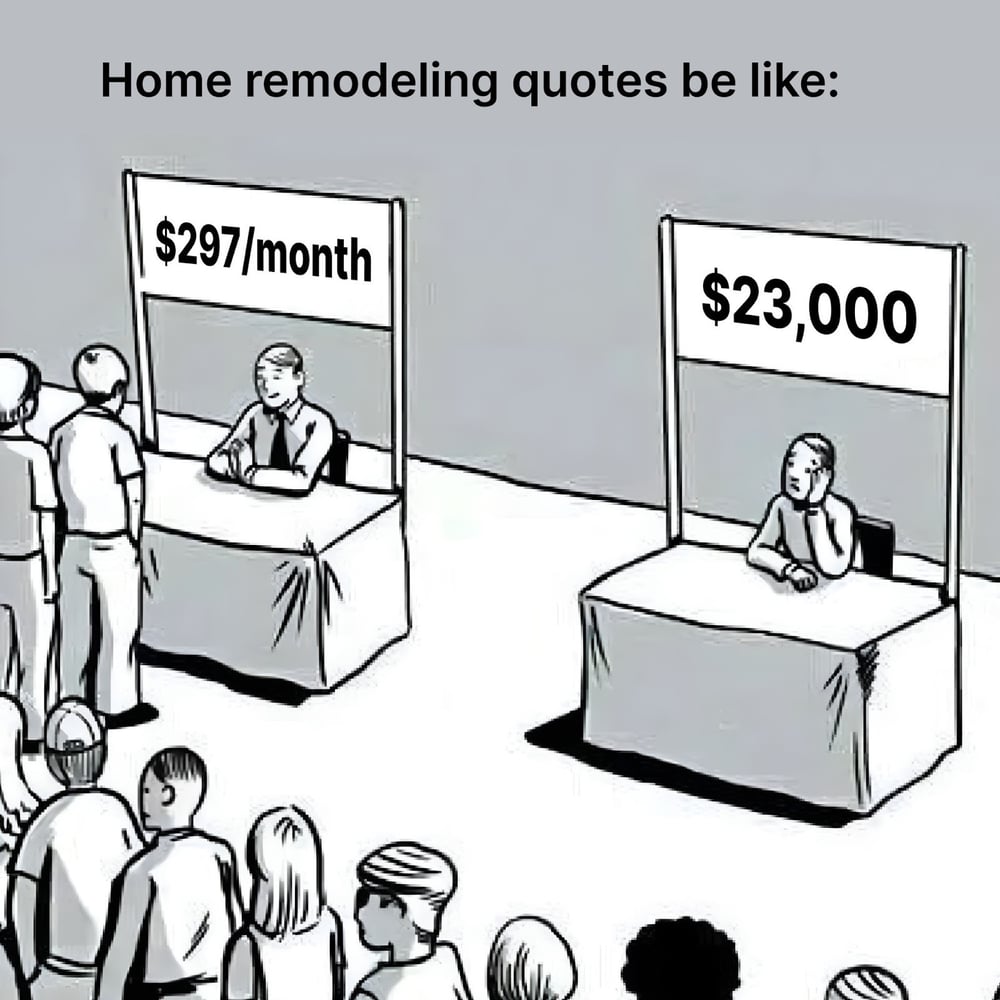
Too many sales are lost in the pricing conversation — not because the number is wrong, but because of how it’s presented. Sales psychology and price framing matter. When homeowners see the full project cost upfront, the size of the number creates instant sticker shock and they hesitate, even when they want the work.
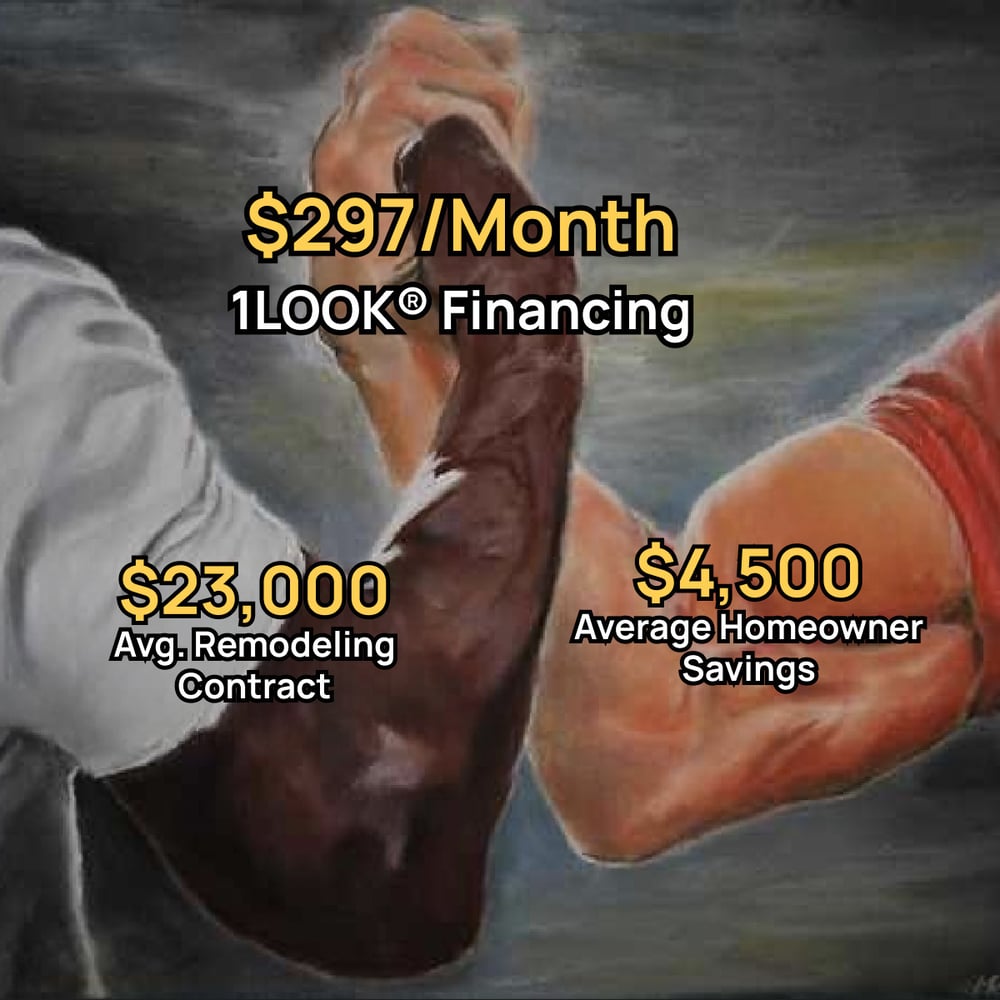
Top contractors avoid this by following the Path to Affordability™ and starting the conversation with the monthly investment instead of the total project price. A simple number like “about $297 a month” is something homeowners can process immediately. It keeps the conversation steady, reduces hesitation, and limits the need for deep discounts just to keep the appointment alive.
Choose the lenders that fit your business
A common concern is being tied to one lender’s fees. With 1LOOK® Financing, contractors select the mix of lenders that match their market—fee levels, approval strength, and regional credit patterns. The platform then routes each customer to the lender most likely to approve and fund. That means fewer declines, an 11%+ higher take rate, and more jobs that actually close
And you’re not left to figure out the rest on your own.
1LOOK® doesn’t just give you access to multiple lenders. One Click Contractor provides expert, hands-on support to help you set up financing the right way and make it work in the real world.
We guide you on your lender stack, help you price financing into your structure while protecting margin, and show you how to market it effectively. We also train your reps so they can present financing confidently and convert more jobs.
Here’s how customers describe that experience.
David Rosser, President of Leafguard, shared two moments that stood out for their team:
“We went to RFP with all of the primary players… everybody’s good at something. The opportunity that 1LOOK® provides is being able to work with the best players at the same time, and not having to pick one or another.”
“Being able to pick up the phone and call the team and figure out how we can get another lender in the platform… that’s paramount. We have to have somebody that is a true partner, and that’s how we feel about 1LOOK®.”
So the question is simple:
Would you rather lose the job, or invest a small amount to win the work you’ve already earned?
Take the Next Step Toward a Stronger Close Rate
When financing keeps even a small share of jobs from slipping away, dealer fees aren’t a cost—they’re a lever that turns more of your hard-earned leads into revenue. It protects the marketing dollars you’ve already invested, reduces discounting, and keeps your close rate strong.
The choice is yours. But the math is pretty clear.
Book a demo with One Click Contractor and 1LOOK® Financing to learn how top contractors present financing options confidently, and close more jobs without sacrificing margin.